

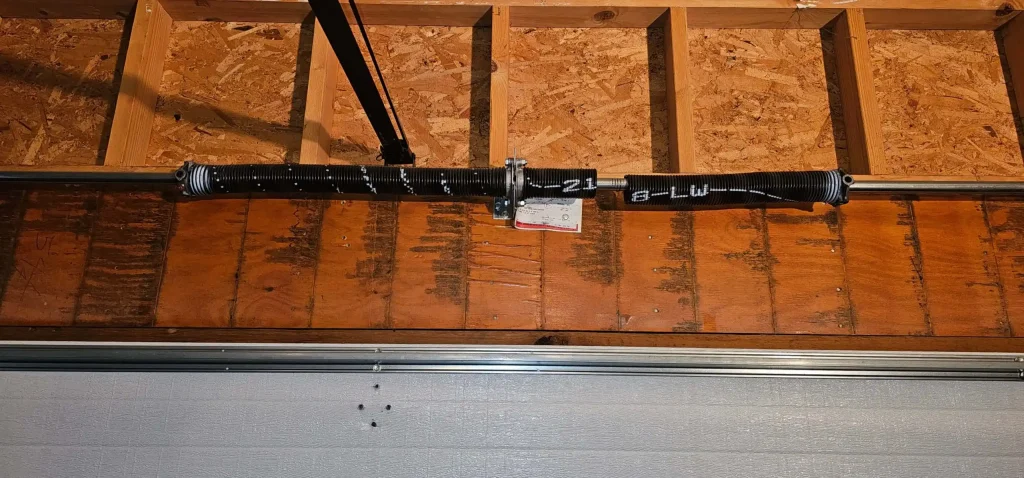
Quick answer: Replacing a broken garage door spring in Kirkland and the Eastside typically costs $350 to $650 in 2026 for a matched pair of torsion springs, or $250 to $400 if only one spring is replaced. A pair of extension springs with safety cables usually runs $250 to $450. The final price depends on six things: the spring type, whether you replace one or both, your door’s size and weight, the spring’s cycle rating, any worn parts found alongside it, and when you need the work done.
Spring replacement is the single most common job in our garage door repair schedule. If your spring just broke, stop using the opener and read how to open your garage door when the spring is broken before you try to move the door.
Key takeaways
- A matched pair of torsion springs costs $350 to $650 installed, and it’s the right call on almost every two-spring door.
- Heavier doors need heavier springs, which raises the price by roughly $100 to $250.
- High-cycle springs cost about $75 to $200 more per pair but can last two to three times longer.
- Worn cables, drums, or rollers found during the visit add cost, but fixing them in one trip is cheaper than a second call.
- Same-day, evening, and weekend service adds about $75 to $250.
- Springs hold enough tension to cause serious injury. Spring replacement is never a DIY job.
Garage Door Spring Replacement Prices at a Glance
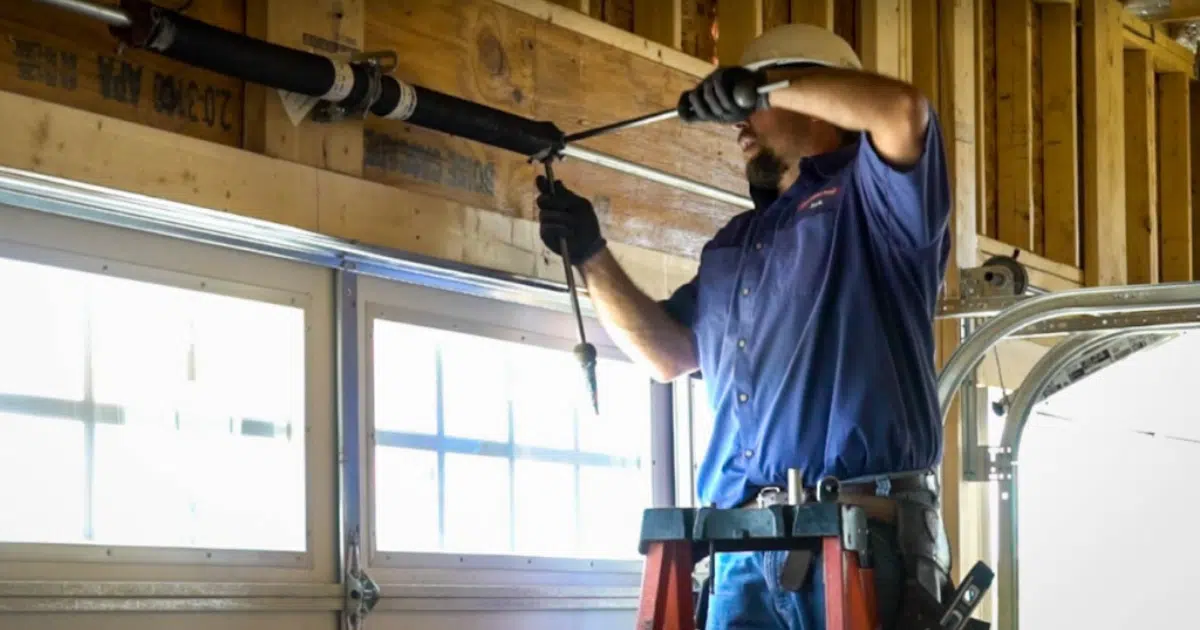
Average garage door spring replacement cost by job type (2026)
Job | Typical Eastside price (2026) |
One torsion spring | $250 to $400 |
Matched pair of torsion springs | $350 to $650 |
Pair of extension springs with safety cables | $250 to $450 |
Convert extension springs to a torsion system | $600 to $1,100 |
High-cycle upgrade (per pair) | +$75 to $200 |
Heavy or oversized door | +$100 to $250 |
Same-day or after-hours service | +$75 to $250 |
1. Torsion Springs vs. Extension Springs
How much does torsion spring replacement cost compared to extension springs?
Price impact: A torsion pair runs $350 to $650. An extension pair with safety cables runs $250 to $450. Converting from extension to torsion costs $600 to $1,100.
What it means: Torsion springs mount on a metal shaft above the door and twist to lift it. Extension springs run along the horizontal tracks on each side and stretch. If you’re not sure which you have, this guide to the parts of a garage door system shows both.
Why the price differs: Torsion springs are heavier, more precisely sized to the door, and take longer to wind and balance. Extension springs cost less, but they generally wear out sooner and need safety cables so a broken spring can’t whip across the garage.
Our advice: On an older door with extension springs, ask about converting to torsion during garage door spring repair. It costs more once, but the door runs smoother and the springs last longer.
2. Replacing One Spring or a Matched Pair
Should you replace one garage door spring or both?
Price impact: One torsion spring costs $250 to $400. Both cost $350 to $650, so the second spring adds only about $100 to $250.
What it means: On a two-spring door, both springs have the same number of cycles on them. When one breaks, the other is close behind.
Why it matters for cost: Replacing just one usually means paying for a second service call within months. A new spring paired with a worn one can also leave the door unbalanced, which strains the opener.
Our advice: Replace both on any two-spring door. For how spring work compares with the other common repairs on your door, see How Much Does Garage Door Repair Cost? 10 Common Repairs and What Drives the Price.
3. Your Door’s Size and Weight
Why does a heavier garage door cost more to fix?
Price impact: A heavy or oversized door typically adds $100 to $250 to the job.
What it means: Springs are sized to the exact weight and height of your door. A double-wide insulated steel door, a solid wood door, or a door with windows and decorative overlays needs heavier springs with thicker wire.
Why it matters for cost: Heavier springs cost more, take longer to wind, and sometimes require a different spring setup, such as two springs where the old door had one.
Our advice: If you’ve added insulation or decorative hardware since the door was installed, say so when you call. The springs must be sized for the door’s current weight, or they’ll wear out early.
4. The Spring’s Cycle Rating
Are high-cycle garage door springs worth the extra cost?
Price impact: High-cycle springs add about $75 to $200 per pair.
What it means: One cycle is one full open and close. Standard springs are typically rated for about 10,000 cycles. High-cycle springs are commonly rated for 25,000 cycles or more.
Why it matters for cost: A family that opens the door four or five times a day can wear out standard springs in six to seven years. High-cycle springs can stretch that to well over a decade, so the cost per year is often lower.
Our advice: If the garage is your main entry, high-cycle springs usually pay for themselves. If you rarely use the door, standard springs are fine.
5. Worn Parts Found Alongside the Spring
What other garage door parts should be replaced with a broken spring?
Price impact: Replacing worn parts during the same visit typically adds $75 to $450, depending on what’s found.
What it means: When a spring snaps, the sudden release of tension can fray a lift cable, crack a drum, or jolt a roller out of the track. Parts that are as old as the spring are often worn too.
Why it matters for cost: Fixing everything in one visit avoids a second trip charge. The most common add-ons we see are:
- Lift cables. Frayed or kinked cables should be replaced with the springs. Cable pricing has its own factors, covered in How Much Does Garage Door Cable Repair Cost? 5 Things That Change the Price.
- Cable drums. Cracked or worn drums can let a new cable slip. See our garage door drum repair service.
- Rollers. Worn steel rollers make the door harder to move and wear new springs faster. A set can be swapped through garage door roller repair.
- Track damage. If the door came off track when the spring broke, it needs garage door off track repair before it can run safely.
Our advice: Ask the technician to show you any worn part before it’s added to the bill.
6. When and Where You Need the Work Done
How much more does same-day garage door spring replacement cost?
Price impact: Same-day, evening, weekend, or holiday service typically adds $75 to $250.
What it means: Springs usually break when the door is closed, which can trap a car inside right before work or school. Many homeowners need the fix the same day.
Why it matters for cost: After-hours visits cost more to staff, and demand spikes after Eastside windstorms and cold snaps. During storm season, the City of Kirkland’s official website posts outage and road updates that can affect how quickly a technician can reach you. For a full look at after-hours pricing, read How Much Does Emergency Garage Door Repair Cost? 7 Things That Raise After-Hours Pricing.
Our advice: If the door is closed and your home is secure, booking the next regular appointment is the easiest way to save.
What a Garage Door Spring Replacement Quote Should Look Like
Sample itemized quote for torsion spring replacement
A fair quote lists every part and charge on its own line. Here’s an example for a 16 x 7 insulated steel door with two high-cycle torsion springs:
Line item | Example price |
Service call (credited when work is approved) | $0 |
Two torsion springs, installed and balanced | $425 |
High-cycle upgrade (pair) | $125 |
Lubrication and safety reversal test | Included |
Washington sales tax (state plus local rate) | About $55 |
Estimated total | About $605 |
Sales tax depends on your exact address. You can look up the combined rate on the Washington State Department of Revenue website. If the technician also finds frayed cables, they should appear as a separate line under garage door cable repair, never bundled into a vague “parts” charge.
Be cautious of a very low phone quote that grows once the technician arrives. That’s one of the warning signs of a garage door repair scam. If the door is old and the quote keeps climbing, compare it against whether it’s cheaper to repair or replace a garage door, or look at garage door replacement options.
How to Make Your New Garage Door Springs Last Longer
Simple habits that extend garage door spring life
- Book yearly garage door maintenance. A technician checks spring tension, lubricates the coils, and catches worn cables early. Here’s what a garage door tune-up costs.
- Watch the door move once a month. A door that jerks, hangs crooked, or slams shut is out of balance. Hunker’s home maintenance guides cover simple visual checks homeowners can do safely.
- Keep the door balanced. Have the springs re-tensioned if you add insulation, windows, or decorative hardware.
- Don’t run the opener with a broken spring. It strains the motor and can damage the drive gear.
DIY-Safe vs. Call-a-Pro Spring Tasks
Can you replace a garage door spring yourself?
No. The Door & Access Systems Manufacturers Association (DASMA) advises having springs inspected and replaced by trained door systems technicians. If you’re wondering which jobs are fair game, see whether you can service your own garage door.
Task | DIY safe? | Why |
Look for a gap in the torsion spring | Yes | Visual check only, from the floor |
Lubricate the spring coils | Yes | Use a garage door lubricant; don’t touch the winding cones |
Test door balance (opener disconnected, door closed) | Yes, with care | Stop if the door feels very heavy |
Unwind or wind a torsion spring | No | Stored tension can cause serious injury |
Replace extension springs | No | Under high tension whenever the door is closed |
Adjust spring tension | No | Requires winding bars and training |
Replace bottom brackets or cables | No | Connected to full spring tension |
Get a Clear Price on Your Broken Garage Door Spring
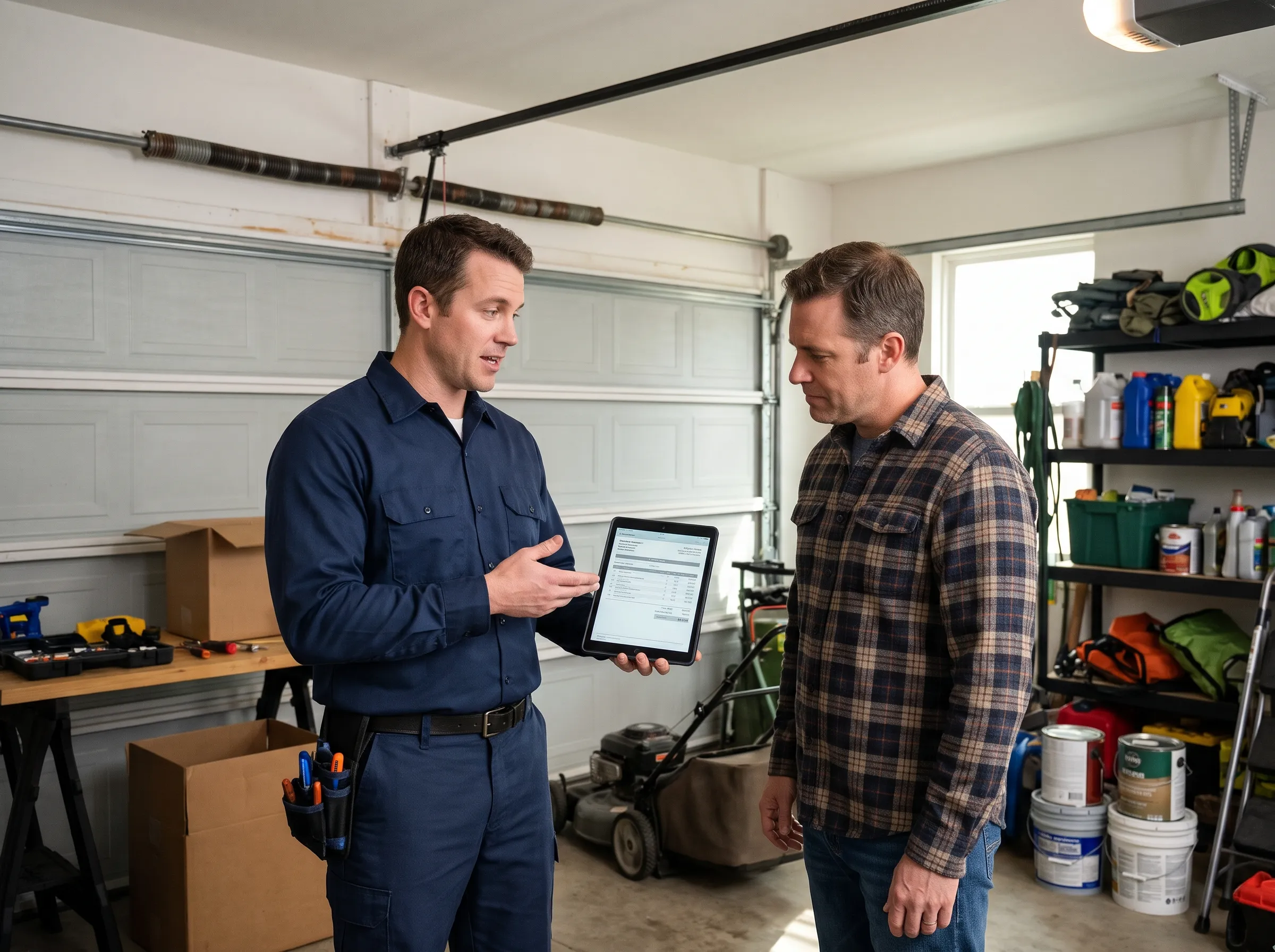
Garage door spring replacement in Kirkland and the Eastside
A broken spring stops your door cold, but it’s one of the most fixable problems a garage door can have. Knowing the six factors that set the price helps you read a quote with confidence and avoid paying for parts you don’t need.
Garage Door Pros replaces torsion and extension springs for homeowners in Kirkland and across the Eastside, with licensed technicians, matched springs sized to your door, and a written price before any work begins.
Spring snapped? Book your spring replacement or request a free quote today, and we’ll get your door moving safely again.


