

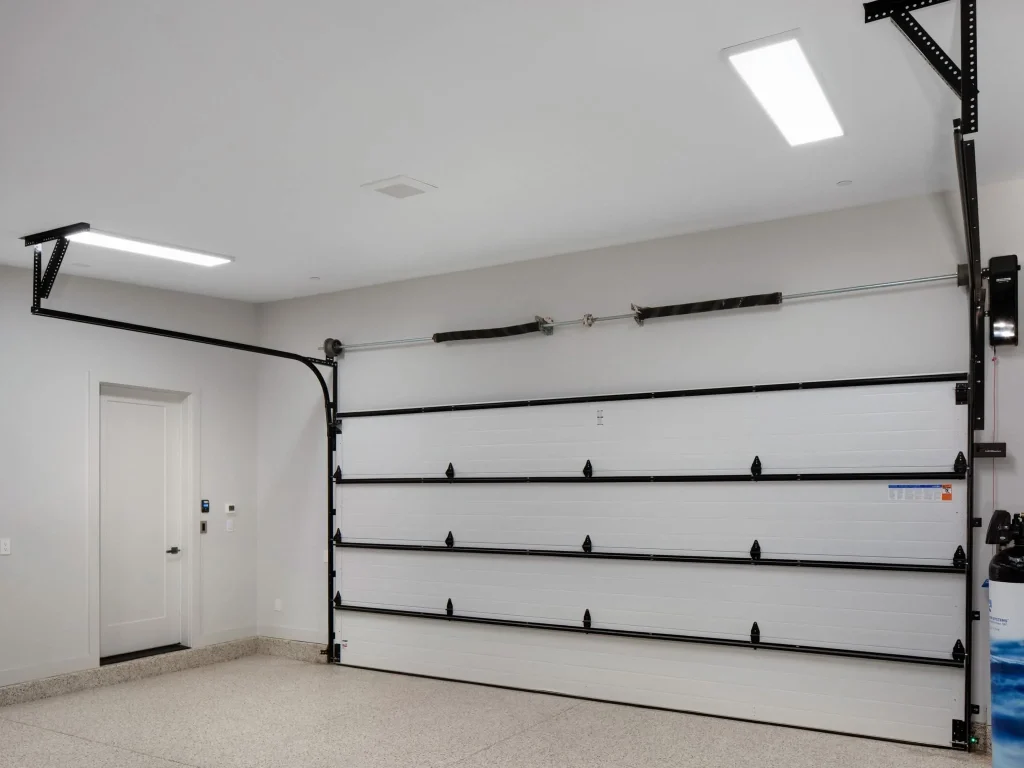
Many people assume that if the door is only slightly misaligned, it can be fixed quickly with basic tools. Understanding whether it is safe to fix a garage door off-track problem yourself requires a clear understanding of how these systems work and where the risks lie. This topic matters because incorrect handling can turn a manageable repair into a serious safety hazard. When a garage door comes off its tracks, the entire system loses the controlled guidance that keeps weight, tension, and movement balanced.
Springs, cables, rollers, and tracks all interact under load, meaning a single mistake can cause sudden movement or component failure. While online tutorials may suggest simple adjustments, they rarely address the stored energy and instability present in an off-track situation. Garage door repair involves more than putting rollers back in place, and homeowners should understand the full scope of the risks before attempting any fix. This article explains what homeowners should know before deciding whether to repair a garage door that is off track.
Understanding What “Garage Door Off Track” Really Means
A garage door off-track condition occurs when one or more rollers disengage from the metal tracks that guide the door’s movement. This disengagement causes the door to lose alignment, resulting in uneven weight distribution and unstable operation. Once off track, the door is no longer supported as designed, which significantly increases the risk of twisting, binding, or collapsing. Garage door off-track repair is necessary to restore controlled movement and structural balance. Understanding this mechanical failure helps clarify why safety becomes a primary concern.
Even when the door appears only slightly misaligned, internal forces may already be compromised. Springs may be pulling unevenly, cables may be carrying unbalanced loads, and rollers may be under extreme side pressure. Attempting to fix garage door off-track issues without understanding these forces often worsens the situation. What appears to be a simple alignment issue is often the result of underlying mechanical problems. Proper repair requires addressing both visible and hidden causes.
Understand why an off-track garage door becomes a serious safety and mechanical concern that demands professional service right away by reading: Why a Garage Door Off-Track Situation Requires Immediate Expert Service.
Why an Off-Track Door Is Structurally Unstable
An off-track garage door is structurally unstable because its weight is no longer guided evenly along both sides of the track system. This instability allows gravity and tension to act unpredictably, especially during movement attempts. Garage door off-track repair restores stability by securing the door and correcting alignment safely. Without proper stabilization, sudden shifts can occur.
Instability also places stress on door panels, hinges, and mounting hardware. Over time, this stress can cause permanent damage that extends beyond the track itself.
Identify the most common causes of garage doors going off track and the early signs that trouble is developing by reading: Common Reasons Your Garage Door Goes Off Track (And How to Spot Them Early).
Why Homeowners Consider DIY Garage Door Off-Track Repair
Many homeowners consider DIY garage door off-track repair because the problem may appear straightforward at first glance. A roller popped out of the track can look like an issue that simply requires lifting and repositioning. Online videos and forums often reinforce the idea that a quick adjustment can solve the problem. The desire to save time and money also motivates homeowners to attempt repairs themselves. These factors make DIY solutions appealing.
However, what DIY sources often overlook is the condition of the system at the moment the door went off track. The underlying cause may include bent tracks, worn rollers, cable imbalance, or spring issues that are not visible immediately. Fix garage door off-track attempts that focus only on symptoms; ignore these root causes. Homeowners may unknowingly put themselves in dangerous situations by assuming the repair is simple. Understanding why DIY feels tempting helps explain why it is also risky.
Get a perspective on why garage doors derail more often than homeowners expect and what recurring factors are usually involved by reading: Why Garage Doors Go Off Track More Often Than You Think.
How Online Tutorials Can Be Misleading
Online tutorials often show ideal scenarios with minimal damage and fully controlled environments. These demonstrations rarely account for real-world variations such as door weight, tension imbalance, or structural wear. Garage door off-track repair requires judgment that videos cannot provide. Misleading simplicity creates false confidence.
Tutorials also fail to show what happens when a repair goes wrong. Sudden door movement, cable snap, or track collapse are rarely depicted. Address garage door off-tracking risks responsibly by recognizing that tutorials cannot replace a professional assessment.
When searching for a repair company, make sure you are dealing with qualified professionals by reading the guide Better Business Bureau.
The Hidden Dangers of Attempting to Fix a Garage Door Off-Track Yourself
Attempting to fix a garage door off-track yourself exposes homeowners to several hidden dangers related to stored energy and sudden movement. Garage door springs are under extreme tension, and cables transfer that force directly to the door. When alignment is compromised, this tension may be uneven or unpredictable. Garage door off-track repair performed without proper tools can trigger the sudden release of force. Injuries often occur when tension shifts unexpectedly.
Another danger involves the sheer weight of the door panels. A standard garage door can weigh hundreds of pounds, and off-track conditions reduce the support that normally controls this weight. If the door slips or collapses during a DIY attempt, serious injury or property damage can occur. Fixing the garage door off-track efforts without stabilization increases these risks significantly. Safety concerns extend beyond simple mechanical difficulty.
Learn more about residential code provisions that support proper garage door alignment and track integrity by visiting the International Code Council.
Why Stored Tension Is the Biggest Risk Factor
Stored tension in springs and cables is the most dangerous element of an off-track garage door. This tension is designed to be balanced, not handled casually. When balance is lost, forces can shift instantly. Garage door off-track repair requires controlled tension management to prevent accidents.
Many homeowners underestimate how much energy is stored in the system. Even a small adjustment can release large forces suddenly.
Common DIY Mistakes That Make the Problem Worse
One common DIY mistake is attempting to force the door back into place without addressing track alignment or cable balance. Forcing rollers into bent or misaligned tracks increases metal fatigue and worsens deformation. This approach often leads to repeated derailment shortly after the door is used again. Garage door off-track repair requires correcting the underlying geometry, not just repositioning components. Force rarely solves structural issues.
Another frequent mistake involves continuing to operate the opener while the door is off track. Homeowners may hope the motor will pull the door back into alignment, but this action usually causes additional damage. The opener is not designed to correct mechanical failures and may suffer internal damage under abnormal loads. Fix garage door off-track problems by avoiding powered operation until stability is restored. Improper actions multiply the repair scope.
Why Temporary Fixes Create False Security
Temporary fixes can make the door appear functional while leaving dangerous conditions unresolved. The door may close once or twice before failing again under stress. Garage door off-track repair must eliminate instability, not disguise it. False security increases injury risk.
These temporary solutions also complicate later professional repair because underlying issues remain hidden. Technicians must undo DIY attempts before correcting root causes.
Tools and Expertise Required for Safe Garage Door Off-Track Repair
Safe garage door off-track repair requires specialized tools designed to manage weight, tension, and alignment precisely. Track straightening equipment, tension controls, stabilizing clamps, and safety supports are not standard household tools. Without these tools, it is difficult to secure the door safely during repair. Professional expertise ensures that each step is performed in a controlled manner. Tools and training work together.
Expertise also involves diagnosing why the door went off track in the first place. This assessment requires experience with roller wear, track deformation, cable balance, and panel alignment.
Why Experience Matters as Much as Equipment
Experience allows technicians to anticipate how the system will respond to adjustments. Small changes can have large effects when tension is involved. Garage door off-track repair benefits from practiced judgment. Experience reduces guesswork.
Without experience, homeowners may misinterpret resistance or movement as improvement. In reality, these signs often indicate worsening conditions.
Situations Where DIY Repair Is Especially Dangerous
Certain off-track situations are especially dangerous for DIY repair attempts. Doors that are visibly hanging, twisted, or partially collapsed indicate severe imbalance. In these cases, any movement can trigger sudden failure. Garage door off-track repair in such conditions requires immediate stabilization before adjustment. DIY intervention significantly increases injury risk.
Another high-risk scenario involves damaged cables or springs. Frayed cables or broken springs remove critical support from the system. Attempting to fix garage door off-track problems when these components are compromised can cause abrupt release of tension. These situations demand professional handling. Safety should always take priority over convenience.
Why Severe Misalignment Signals Immediate Risk
Severe misalignment indicates that multiple components have already failed or shifted. Weight distribution is no longer predictable. Garage door off-track repair must begin with securing the door safely. Movement without stabilization is dangerous.
Misalignment also suggests possible structural damage to tracks or panels.
How Professional Garage Door Off-Track Repair Ensures Safety
Professional garage door off-track repair begins with stabilizing the door to eliminate collapse risk. We secure the door, control tension safely, and assess all components before making adjustments. This methodical approach prevents sudden movement and injury. Safety is prioritized at every step. Controlled repair reduces risk significantly.
After stabilization, we correct track alignment, replace damaged rollers or cables, and verify balanced operation. We also test the system under controlled conditions to ensure reliable performance. Comprehensive service addresses root causes rather than symptoms. Safety remains central throughout the process.
Why Controlled Procedures Prevent Accidents
Controlled procedures account for stored energy and weight distribution. Each adjustment is performed in sequence to avoid unexpected shifts. Garage door off-track repair relies on these protocols to maintain safety. Predictability reduces risk and prevents garage door replacement.
Without procedures, adjustments become guesswork. Guesswork increases the chance of sudden failure. Address garage door off-tracking risks responsibly by following established safety protocols. Professional procedures protect people and property.
When to Stop and Call for Professional Help
Homeowners should stop and seek professional help whenever a garage door shows signs of severe misalignment, cable damage, or instability. If the door will not move evenly or appears twisted, DIY attempts are unsafe. Garage door off-track repair in these situations requires expert handling. Recognizing limits is an important safety decision.
Another clear sign is resistance or loud noises during movement attempts. These symptoms indicate underlying mechanical stress. Knowing when to stop prevents injury and damage. Caution is always justified with heavy mechanical systems.
Reliable Garage Door Off-Track Repair Services
Garage door off-track repair involves far more risk than many homeowners initially realize, especially when stored tension and heavy components are involved. While it may be tempting to fix garage door off-track issues yourself, the potential for injury, further damage, and repeat failure is significant. Understanding how off-track situations develop and why they are dangerous helps homeowners make informed decisions. Professional repair ensures safe stabilization, accurate diagnosis, and lasting correction. Knowing what homeowners should consider before attempting DIY repair protects safety, property, and long-term reliability.
Garage Door Pros provides professional garage door solutions rooted in passion and industry expertise. Founded on hard work and a clear vision for quality service, each project is completed with integrity and care. The focus remains on delivering reliable results that support safety and everyday convenience. Customers receive service backed by experience and genuine commitment.
Contact us today or give us a call for expert garage door repair and installation.
Frequently Asked Questions
Is it ever safe to fix a garage door off-track without professional help?
In limited situations involving very minor misalignment, it may appear possible, but risks are often hidden. We will assess whether conditions allow safe correction. Most off-track situations benefit from professional handling.
DIY attempts often underestimate tension and instability. Even small errors can cause sudden movement. We focus on safety first when evaluating repair options. Caution is always advised.
What injuries can occur during DIY garage door off-track repair?
Common injuries include hand, arm, and head injuries caused by sudden door movement or cable release. We secure doors before making adjustments to prevent these risks. Uncontrolled tension is a serious hazard.
Falls and crushing injuries are also possible when doors collapse unexpectedly. We provide controlled repair methods to reduce danger. Safety protocols protect everyone involved.
Why does my garage door keep going off track after I fix it?
Repeated off-track issues usually indicate unresolved alignment, cable, or roller problems. We identify and correct root causes rather than temporary symptoms. Repeat failures often follow incomplete repairs.
Can using the opener damage the door if it is off track?
How do we determine what caused the door to go off track?
We examine tracks, rollers, cables, panels, and mounting hardware. Identifying the cause is essential for lasting repair. Visual symptoms alone are not enough.
Our assessment looks for wear, impact damage, and alignment issues. Correcting the cause prevents future derailment. Diagnosis guides repair.
Is a slightly crooked door dangerous?
Even slight crookedness indicates an imbalance that can worsen quickly. We recommend assessment before continued use. Minor misalignment often precedes derailment.
Ignoring small issues increases risk over time. We evaluate severity and recommend appropriate action. Early attention improves safety.
Can weather or house movement cause off-track problems?
Yes, temperature changes and foundation movement can affect alignment gradually. We account for environmental factors during inspection. Adjustments accommodate these shifts.
Structural movement is often subtle but impactful. We monitor alignment changes to prevent derailment. Awareness supports long-term stability.
How long does professional garage door off-track repair usually take?
Repair time depends on damage severity and component condition. We prioritize thorough, safe correction over speed. Proper repair ensures reliability.
Some repairs are completed quickly, while others require more adjustment. We explain timelines clearly. Quality work protects longevity.
Will fixing an off-track door extend its lifespan?
Correct repair restores alignment and balance, which reduces wear. We aim to preserve system integrity whenever possible. Proper repair supports long-term use.
Ignoring or mishandling off-track issues shortens lifespan. We focus on lasting solutions. Longevity improves with correct service.
What should we do immediately when a door comes off track?
We recommend stopping all operations and keeping the area clear. We will assess stability before any movement occurs. Securing the door safely is the first step.
Avoid forcing the door or using the opener. We provide controlled repair methods. Immediate caution prevents injury and damage.


